
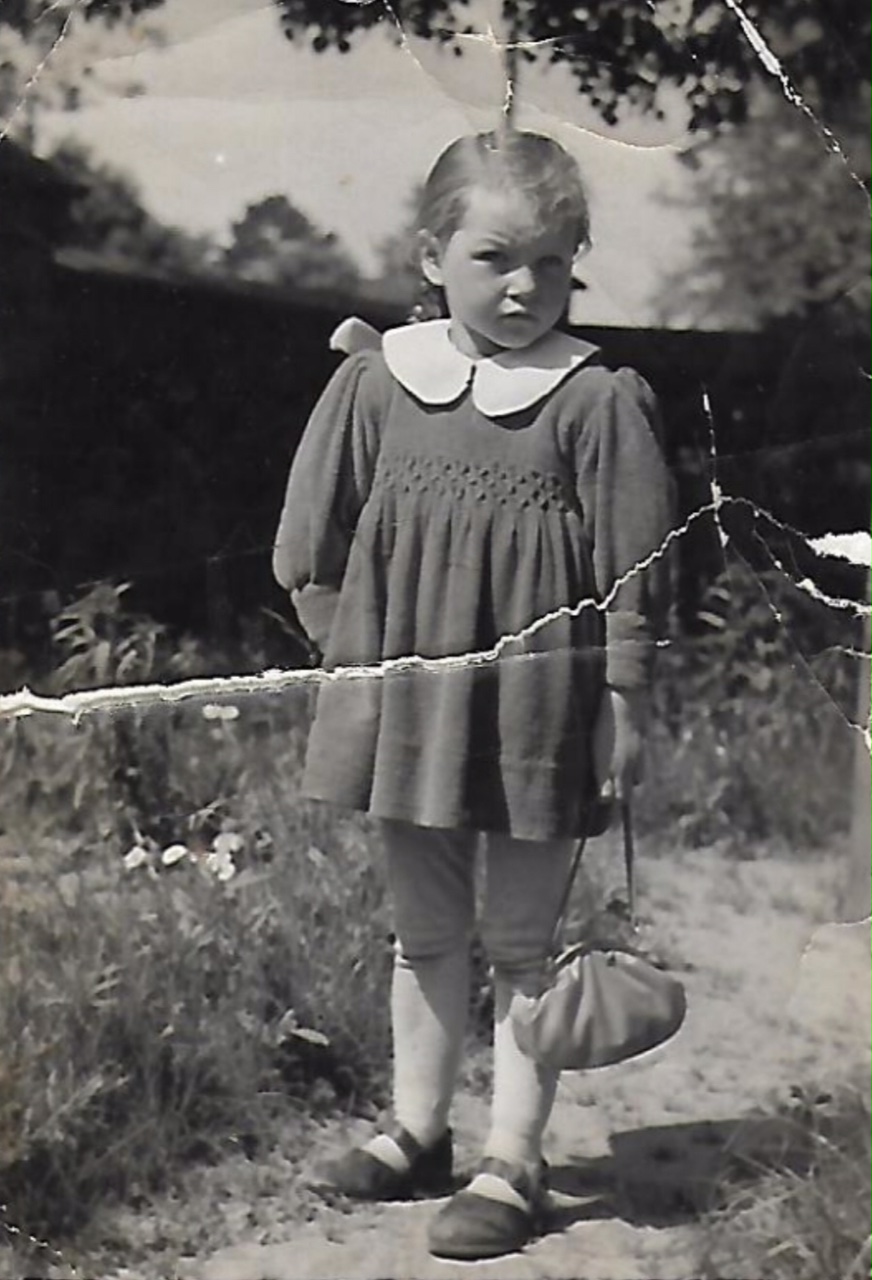
– Good morning, today I have the honour of interviewing Maria Kolasińska, my grandmother. Grandma, can I ask how old are you?
– I am 70 years old, I was born in the year 1951.
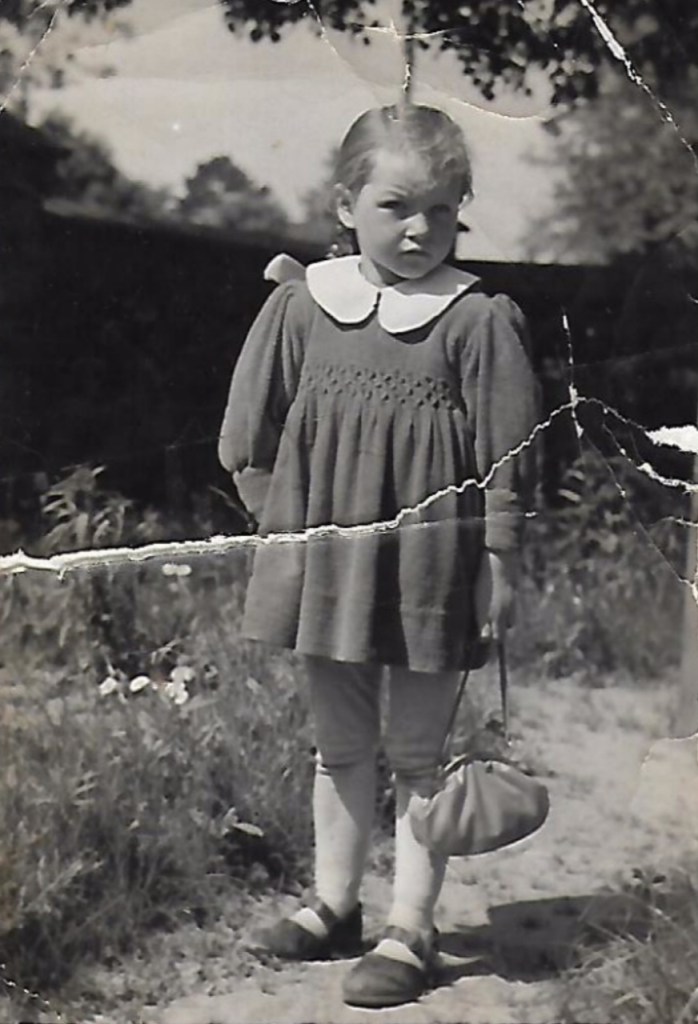
– I would like to ask you about your childhood. Could you describe to me how your family house looked like?
– My family home? It was a four room house. My family consisted of mom, dad, me and my younger sister. There was also a farm that was ran by my dad, it was 8 hectares of arable land and 4 hectares of forest. Father was farming, mom was just raising the children and taking care of the house. We were living in the country, about 1,5 kilometres from a town that had shops, a church, a post office and such. I was raised with my parents until I was seven, then I went to a primary school in Staroźreby, that was 1,5 kilometres from my home.
– Did you go there alone?
– The first couple of days my mom would walk me there, but later I would go without her, with other kids from the neighbourhood. I would go there with a pretty briefcase that I carried in hand, because there were no pretty backpacks like nowadays. In it I carried books, notebooks, a pencil and ink, because in these days one would write with a fountain pen. Sometimes it was quite heavy, after all those were different conditions from the ones that children have nowadays.

– And how did the school look?
-The school was in Staroźreby and the building nice, new, rebuilt after the war. On the ground floor was located a primary school and on the first floor a high school. I started going there in 1958, so for this time the building was very modern. We had to wear navy blue or black aprons and white collars, with a shield badge on the sleeve . Even when we wore winter coats the shield had to be visible.
– What was the attitude of the students towards their teachers?
– I have to say that the students were very subordinate to teachers. They wanted to listen to them, there weren’t any brawls. Of course there were some hooligans but on a level that was easy to deal with. And the teachers were very involved in their work, after all those were the times a couple of years after the war at least 10 years.
– And the issue of extracurricular trips, were they organized?
– There was no bigger trips to cities. There were class trips organized by class teachers. They would bring their pupils on bicycle trips, to a park or for a ride. There was no trips like now, to go to a theatre or a cinema. There were no such things in the area.
– What was your individual approach to learning and school?
– Generally, I liked to learn especially in primary school. I loved to read, which stayed with me to this day. After a seven year primary school I went to a four year high school.
– What were your plans after finishing high school and did you manage to realize them?
– My friend and I wanted to go to midwifery, but we quickly gave up on the idea. After all that I went to work.
– What did you do after school, in your free time?
– I had a friend named Bożena in the neighbourhood she would visit me often and we played together. For example hopscotch, tag or hide and seek. Out of toys I had a rag doll stuffed with sawdust. I didn’t have many friends because there were none in the neighbourhood apart from this one girl. I had good contact with my peers but I couldn’t meet with them because they lived too far away. When I turned 10 I started doing such household chores as helping to raise my sister, and helping my parents with some lighter work.
– How did your holidays look like?
– I spend most of my holidays at home however sometimes my aunt would take me to Warsaw. She lived near the airport which allowed me to watch airplanes from her house. It made a incredible impression on me, especially when the heavy airplanes landed. The panes trembled in the windows. A few kilometres from our family home lived my grandmother so I often went to her as well.
– What about other means of communication than planes? I mean cars e.t.c.
– I would often see cars from my window because I lived next to a highway. Getting to some nearby town was problematic. Nowadays buses drive there every hour but then there were none. People would come by in their trucks and drive others in them. No one in our house had a driver’s license, my dad only knew how to drive a tractor. When I was smaller we often rode horses if we had to go somewhere, later when I grew older, we could walk there.
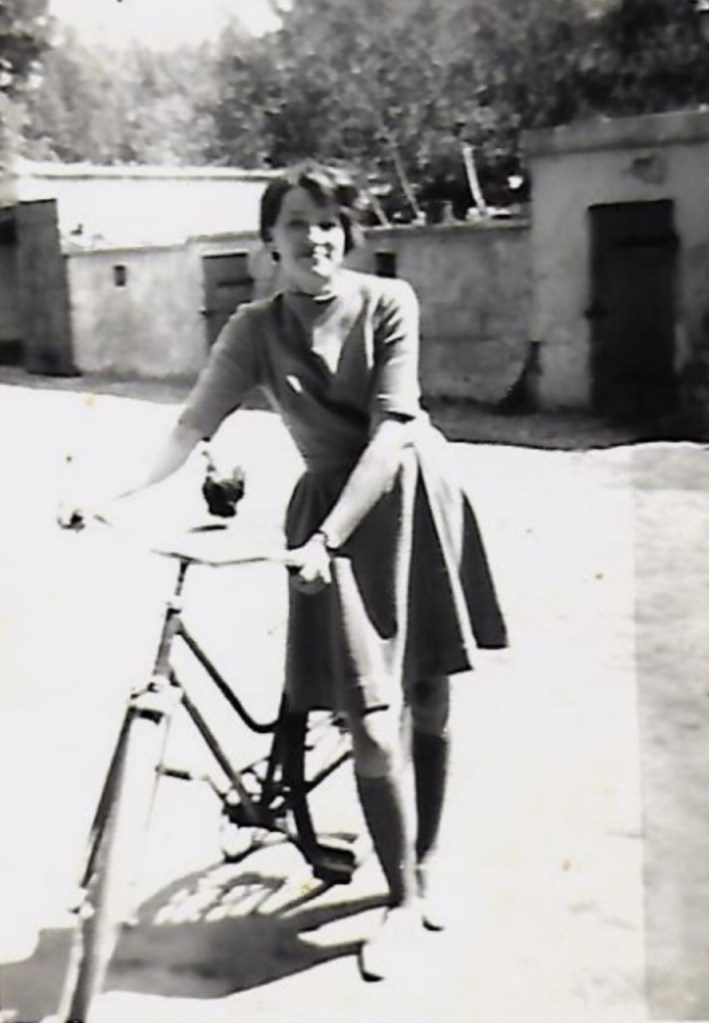
– What was your first job?
– My first job was in an agricultural circle as a junior accountant, I worked there for 1,5 a year. After that I started worked in here when I live and I worked until I retired.
– I have a question concerning your adult life. When did you buy your first home?
– At first I lived in a business apartment and after 8 years I got the possibility of buying of my own employee plot. After 2 years of building I moved there with my husband and children.
– Do you see differences between the upbringing of children currently and before and differences in housekeeping?
– There surely is a difference between my mom and me. Before, one would have to do everything by hand; hand wash clothes in the laundry tub, sew clothes for children by hand because they were hard to find. Nowadays it’s much easier to keep the house clean.
– Did you meet your grandparents?
– I met my grandmothers – grandma Salomea and grandma Bronisława. One of my grandfathers died when i was little and other during the war.
– If I can ask, considering that you were born in 1951 those were times fresh after the war did it take a toll on your life in any way?
– Surely. My mother was deported to Germany as a child, aged 13. She was forced to work there. After a year of wandering all over Poland she managed to return home but she was traumatized by it. I always remember her saying that God forbid war would break out, so that her children could live to an old age, so that they would not experience war. My father was arrested when my mother was pregnant and that is why I was born in his absence. He was arrested because he belonged to the Home Army (AK) during the war. When he got out of prison, I was already 5 years old. So my childhood was tragic. Unfortunately, such a system existed in Poland at that time. People who in some way fought in this home army, fought for Poland were later persecuted. When I was little, I used to go to visit him. Once during a visit, he slipped a pewter ring, with the blue eye, into my pocket. He made it in the workshop. But of course it wasn’t allowed, it’s a whole lot of luck that I realized it out at home, because if I had taken it out in jail I would have caused him a lot of trouble. My mother certainly wouldn’t have taken him in either, she was too afraid for her family to take such a risk. In my childhood, there were also very heavy taxes on farmers, so it used to be very hard for farms. Sometimes we had to hide one pig at a time so they wouldn’t all be written off and taken away. The state was very controlling this. If you had cows, you always had to put aside a certain amount of milk, and this also applied to cereals. The state bought it all, but for very little money. Much cheaper than if you could sell it yourself.
– And how did the shops look like then?
– The shops looked terrible, there were few products to buy. There were less preserves that are now easy to buy in jars. I had it good because thanks to a big farm we had eggs, milk, butter, cheese and meat. Of course the food in the shops was for cards which was a big impediment for many. The shelves in the shops were often empty.
– And how did the healthcare look like?
– There was no doctor in Staroźreby when I was young. Everyone treated what they could and how they could, with home methods.
– The last question. What do you think changed for worse and what for the better in the current world?
– I think that there is more positives. Now many things are just easier. Life is simpler and more comfortable. There is a better access to medication, food, many jobs are easier thanks to machines. Children have less responsibilities and thanks to that can have a more carefree childhood. People are more free. They can speak freely, enter and leave the country when they want. It’s safer and calmer.
-That’s all I wanted to ask, thank you very much.
Ola Puchta
 Erasmus FEEL